We were in the Ibis just off the Royal Mile. I had walked halfway around the castle on the first night and I knew basically where St. Cuthbert's was. I woke early, checked the "big board" (a magical electronic map in the hotel) in terms of details, and was off. Of course, once there, it took me a little while to find De Quincey (I even Googled to get a look at his stone and adjacent stones -- this helped immensely). Luckily it was a pretty small graveyard. Pics: "on the way to" and "within" the churchyard/graveyard of St. Cuthbert's, Edinburgh. *
Several people involved in the film production — including Tarkovsky — had met deaths, which some crew members attribute to the film's long, arduous shooting schedule in toxic locations. Sound designer Vladimir Sharun recalls: We were shooting near Tallinn in the area around the small river Jägala with a half-functioning hydroelectric station. Up the river was a chemical plant and it poured out poisonous liquids downstream. There is even this shot in Stalker: snow falling in the summer and white foam floating down the river. In fact it was some horrible poison. Many women in our crew got allergic reactions on their faces. Tarkovsky died from cancer of the right bronchial tube. And Tolya Solonitsyn too. That it was all connected to the location shooting for Stalker became clear to me when Larisa Tarkovskaya died from the same illness in Paris. [ 6 ] [From Wikipedia: http://en.wikipedia.org/wiki/Stalker_(film )]
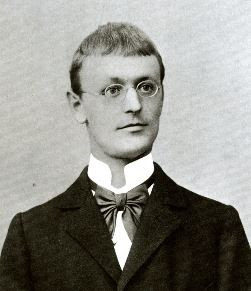
Rilke is one example; Hesse another. For Hesse psychoanalysis--of the Jungian ilk--was an inestimable boon. From Joseph Mileck's Hermann Hesse: Life and Art : Toward the end of April, Hesse left for Sonnmatt, a private clinic near Lucerne. Here he was referred to J. B. Lang, an analyst who had been one of C. G. Jung's students. He was able to return to Bern at the end of May after some electrotherapy and but twelve three-hour analytical sessions. Sixty more visits to Lucerne took place from June 1916 to November 1917. Some of Hesse's anxieties were dispelled, he learned to cope more ably with his frustrations, and he slowly emerged from his deep depression. Hesse's personal encounter with psychoanalysis had a profound effect upon his life and art. It provided him with the incentive necessary to appraise himself and his adjustment to life, and afforded him the insights needed to begin his long inward path ( Weg nach Innen ), that tortuous road t...
Eveline Hańska ( Ewelina , née Rzewuska , 6 January c. 1805 – 11 April 1882) was a Polish noblewoman best known for her marriage to French novelist Honoré de Balzac . Born at the Wierzchownia estate in Volhynia , [ 1 ] (now Ukraine) Hańska married landowner Wacław Hański (Wenceslas Hanski) when she was a teenager. [ 2 ] Hański, who was about 20 years her senior, suffered from depression. They had five children, but only a daughter, Anna, survived. In the late 1820s, Hańska began reading Balzac's novels, and in 1832, she sent him an anonymous letter. This began a decades-long correspondence in which Hańska and Balzac expressed a deep mutual affection. In 1832, they met for the first time, in Switzerland . Soon afterward he began writing the novel Séraphîta , which includes a character based on Hańska. After her husband died in 1841, a series of complications obstructed Hańska's marriage to Balzac. Chief of these was the estate and her daughter Anna's inheritance, bot...



Comments