Posts

Showing posts with the label Wittgenstein

St. Augustine's Confession: The Mystery of Language

Was thinking of this passage and so reread it. Hardly a theory. But an interesting and probably "unintended" beginning (4th Cent. A.D.). *** Thus, little by little, I became conscious where I was; and to have a wish to express my wishes to those who could content them, and I could not; for the wishes were within me, and they without; nor could they by any sense of theirs enter within my spirit. So I flung about at random limbs and voice, making the few signs I could, and such as I could, like, though in truth very little like, what I wished. And when I was not presently obeyed (my wishes being hurtful or unintelligible), then I was indignant with my elders for not submitting to me, with those owing me no service, for not serving me; and avenged myself on them by tears. Such have I learnt infants to be from observing them; and that I was myself such, they, all unconscious, have shown me better than my nurses who knew it. * Passing hence from infancy, I came to boyhood, ...
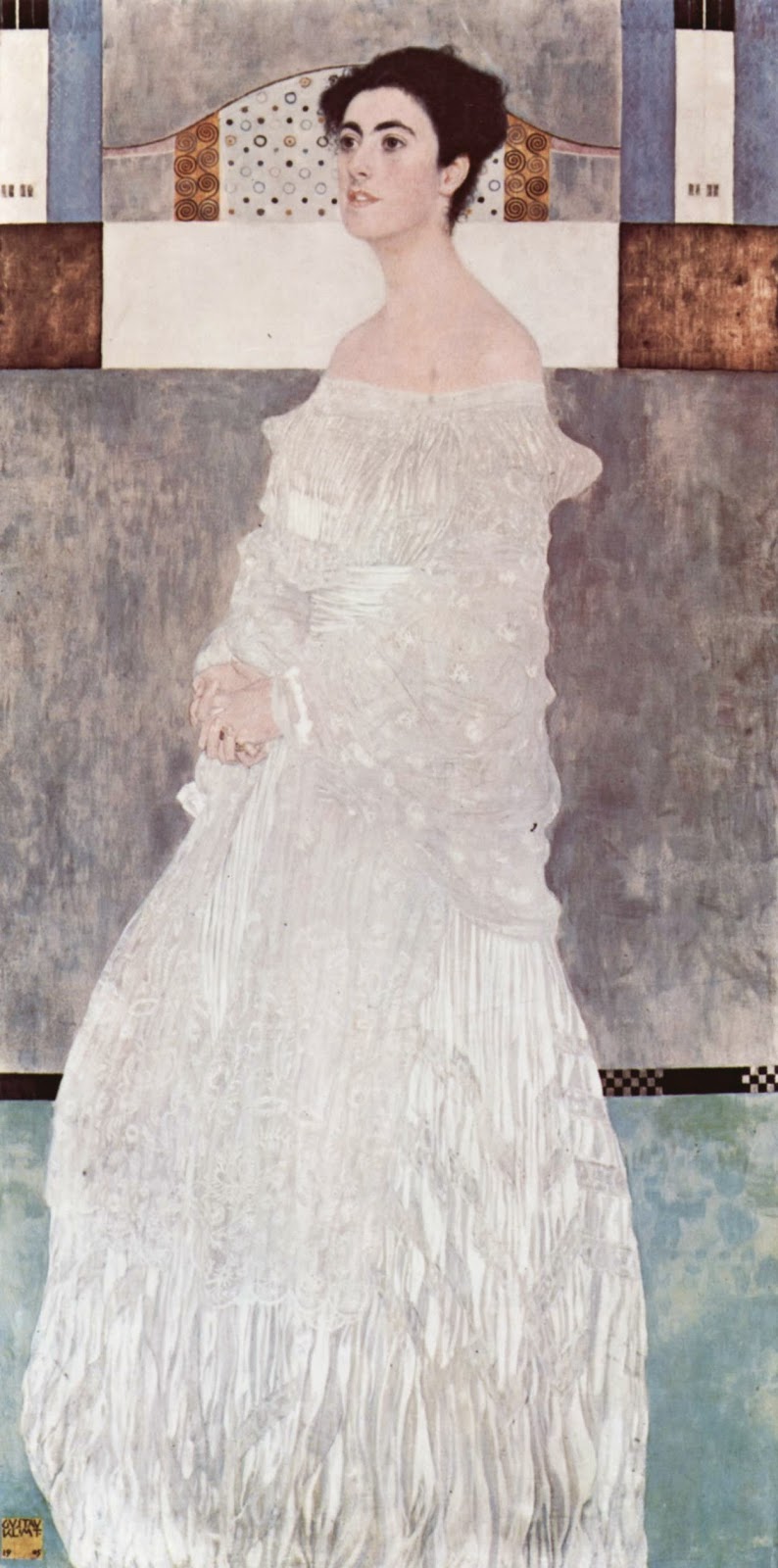
Klimt Portrait of Margarethe Stonborough-Wittgenstein

Image
  " Gustav Klimt 055 " by Gustav Klimt - The Yorck Project: 10.000 Meisterwerke der Malerei. DVD-ROM, 2002. ISBN 3936122202 . Distributed by DIRECTMEDIA Publishing GmbH.. Licensed under Public domain via Wikimedia Commons .

The House Wittgenstein Built His Sister

Image
Roithammer builds his sister a Cone. 

Thought Precedes Language--Or Does It?

Augustine's words--and Wittgenstein's interpretation of those words--would seem to say, Yes, thought precedes language. Though I guess it's not that simple and--re the truth--the jury is apparently still out: http://www.yale.edu/minddevlab/papers/nature-children-think.pdf

Wittgenstein's "Investigations": Augustine and the Essence of Human Language

I suppose Wittgenstein saw something here most of us (including perhaps Augustine) wouldn't have seen. But isn't that, to some degree, the way we all read: We sometimes find things other than what the author intended. * Of course in his Philosophical Investigations Wittgenstein quotes the Latin of Augustine's Confessions (I. 8) . I will simply give the English translation: When they (my elders) named some object, and accordingly moved towards something, I saw this and I grasped that the thing was called by the sound they uttered when they meant to point it out. Their intention was shown by their bodily movements, as it were the natural language of all peoples: the expression of the face, the play of the eyes, the movement of other parts of the body, and the tone of voice which expresses our state of mind in seeking, having, rejecting, or avoiding something. Thus, as I heard words repeatedly used in their proper places in various sentences, I gradually learnt to unde...

A Lifelong Crusoe and Wittgenstein's Private Language Argument

Undoubtedly Robinson Crusoe has been around for some time and he'll be around for some time to come: he's very much a part of us now. Even if we haven't read the story, we know the basic outline. Crusoe is shorthand for man-alone-on-an-island. * I forget--or have lost track of--where I first ran into the idea of a "lifelong Crusoe," but almost certainly it was in relation to Wittgenstein's Private Language Argument. From Mark Addis's Wittgenstein: A Guide for the Perplexed :    A controversial issue is whether a solitary individual could follow a rule. It should be observed that this is not the matter of whether an individual can follow rules which are particular to himself and unknown to the rest of the linguistic community. Instead the question is whether it is possible for an individual to follow a rule in the absence of a community. This problem is usually cast in terms of a lifelong Crusoe who is characterized as an individual isolated from bir...