Posts

Showing posts with the label Ford Madox Ford

Ford Madox Ford: Memoirs

On the death of his grandfather, Ford Madox Brown: Upon the top was inscribed “Ford Madox Brown,” and on the bottom, “Wycliffe on His Trial Before John of Gaunt. Presented to the National Gallery by a Committee of Admirers of the Artist.” In this way the “X” of Madox Brown came exactly over the centre of the picture. It was Madox Brown’s practice to begin a painting by putting in the eyes of the central figure. This, he considered, gave him the requisite strength of tone that would be applied to the whole canvas. And indeed I believe that, once he had painted in those eyes, he never in any picture altered them, however much he might alter the picture itself. He used them as it were to work up to. Having painted in these eyes, he would begin at the top left-hand corner of the canvas, and would go on painting downward in a nearly straight line until the picture was finished. He would, of course, have made a great number of studies before commencing the picture itself. Usually there was a...

Ford Madox Ford: Memoirs

A passage re the last meeting between William Morris and Ford Madox Brown (FMF's grandfather): Morris, I suppose, was tired with his lecturing and answering of questions, for at a given period he drew from his pocket an enormous bandana handkerchief in scarlet and green. This he proceeded to spread over his face, and leaning back in his chair he seemed to compose himself to sleep after the manner of elderly gentlemen taking their naps. One of the young maidens began asking my grandfather some rather inane questions — what did Mr. Brown think of the weather, or what was Mr. Brown’s favorite picture at the Academy? For all the disciples of Mr. Morris were not equally advanced in thought. Suddenly Morris tore the handkerchief from before his face and roared out: “Don’t be such an intolerable fool, Polly!” Nobody seemed to mind this very much — nor, indeed, was the reproved disciple seriously abashed, for almost immediately afterward she asked: “Mr. Brown, do you think that Sir Frederi...

Ford Madox Ford: Memoirs

On Pre-Raphaelites and the Aestheticists: Pre-Raphaelism in itself was born of Realism. Ruskin gave it one white wing of moral purpose. The Æstheticists presented it with another, dyed all the colors of the rainbow, from the hues of mediæval tapestries to that of romantic love. Thus it flew rather unevenly and came to the ground. The first Pre-Raphaelites said that you must paint your model exactly as you see it, hair for hair, or leaf-spore for leaf-spore. Mr. Ruskin gave them the added canon that the subject they painted must be one of moral distinction. You must, in fact, paint life as you see it, and yet in such a way as to prove that life is an ennobling thing. How one was to do this one got no particular directions. Perhaps one might have obtained it by living only in the drawing-room of Brantwood House, Coniston, when Mr. Ruskin was in residence. —

Ford Madox Ford: Memoirs

 On Christina Rossetti: She wanted to be obscure, and to be an obscure handmaiden of the Lord, as fervently as she desired to be exactly correct in her language.

Ford Madox Ford: Memoirs

And over the porch was the funereal urn with the ram’s head. This object, dangerous and threatening, has always seemed to me to be symbolical of this circle of men, so practical in their work and so romantically unpractical, as a whole, in their lives. They knew exactly how, according to their lights, to paint pictures, to write poems, to make tables, to decorate pianos, rooms, or churches. But as to the conduct of life they were a little sketchy, a little romantic, perhaps a little careless. I should say that of them all Madox Brown was the most practical. But his way of being practical was always to be quaintly ingenious. Thus we had the urn. Most of the Pre-Raphaelites dreaded it; they all of them talked about it as a possible danger, but never was any step taken for its removal. It was never even really settled in their minds whose would be the responsibility for any accident. It is difficult to imagine the frame of mind, but there it was, and there to this day the urn remains.

Ford Madox Ford: Parade's End, Vol.. 2

And morning had brought the common-sense idea that probably she wanted to do nothing more than pull the string of the shower-bath — which meant committing herself to the first extravagant action that came into her head — and exulting in the consequences.

Ford Madox Ford: Some Do Not ...

Being near Tietjens she lifted her plate, which contained two cold cutlets in aspic and several leaves of salad: she wavered a little to one side and, with a circular motion of her hand, let the whole contents fly at Tietjens’ head. She placed the plate on the table and drifted slowly towards the enormous mirror over the fireplace. “I’m bored,” she said. “Bored! Bored!”

Ford Madox Ford: Some Do Not ...

The girl said: “I’m coming up now! I’ve found out something....” He watched intently the place where she must appear; it would give him pointers about the impenetrability of mist to the eye. Her otter skin cap had beads of dew: beads of dew were on her hair beneath: she scrambled up, a little awkwardly: her eyes sparkled with fun: panting a little: her cheeks bright. Her hair was darkened by the wetness of the mist, but she appeared golden in the sudden moonlight. Before she was quite up, Tietjens almost kissed her. Almost. An all but irresistible impulse! He exclaimed: “Steady, the Buffs!” in his surprise. She said: “Well, you might as well have given me a hand.”

Ford Madox Ford: Some Do Not ...

The girl said: “I’m coming up now! I’ve found out something....” He watched intently the place where she must appear; it would give him pointers about the impenetrability of mist to the eye. Her otter skin cap had beads of dew: beads of dew were on her hair beneath: she scrambled up, a little awkwardly: her eyes sparkled with fun: panting a little: her cheeks bright. Her hair was darkened by the wetness of the mist, but she appeared golden in the sudden moonlight. Before she was quite up, Tietjens almost kissed her. Almost. An all but irresistible impulse! He exclaimed: “Steady, the Buffs!” in his surprise. She said: “Well, you might as well have given me a hand.”

Ford Madox Ford: Some Do Not ...

It was in that way his mind worked when he was fit: it picked up little pieces of definite, workmanlike information. When it had enough it classified them: not for any purpose, but because to know things was agreeable and gave a feeling of strength, of having in reserve something that the other fellow would not suspect.... He passed a long, quiet, abstracted afternoon.

Ford Madox Ford: Some Do Not ...

From the first book of four in Parade's End: “You don’t want me to be a pure young girl,” Sylvia asked with lazy incredulity. “I do not!” the Father said, “but I’d wish that at times ye’d remember you once were.” “I don’t believe I ever was,” Sylvia said. “If the nuns had known, I’d have been expelled from the Holy Child.” “You would not,” the Father said. “Do stop your boasting. The nuns have too much sense.... Anyhow, it isn’t a pure young girl I’d have you or behaving like a Protestant deaconess for the craven fear of hell. I’d have ye be a physically healthy, decently honest-with-yourself young devil of a married woman. It’s them that are the plague and the salvation of the world.”

Ford Madox Ford: The Good Soldier

I don’t know. And there is nothing to guide us. And if everything is so nebulous about a matter so elementary as the morals of sex, what is there to guide us in the more subtle morality of all other personal contacts, associations, and activities? Or are we meant to act on impulse alone? It is all a darkness.

Tarkovsky's "Ivan's Childhood"

Image
Currently reading: FMF: a bio + just started Parade's End (a somewhat garbled Kindle version -- we need a better buying option!). Currently watching: Early Tarkovsky. *                       

The Good Soldier: Two Last Clips

I HAVE, I am aware, told this story in a very rambling way so that it may be difficult for anyone to find their path through what may be a sort of maze. I cannot help it. I have stuck to my idea of being in a country cottage with a silent listener, hearing between the gusts of the wind and amidst the noises of the distant sea, the story as it comes. And, when one discusses an affair—a long, sad affair—one goes back, one goes forward. One remembers points that one has forgotten and one explains them all the more minutely since one recognizes that one has forgotten to mention them in their proper places and that one may have given, by omitting them, a false impression. I console myself with thinking that this is a real story and that, after all, real stories are probably told best in the way a person telling a story would tell them. They will then seem most real. * Mind, I am not preaching anything contrary to accepted morality. I am not advocating free love in this or any other case....

Ford Madox Ford @ Olivet College

Image
Grew up not far from Olivet in Jackson, but have never been to the campus. I sent two e-mails inquiring about Ford Madox Ford's time at Olivet. I got one very generous reply from a Marty Jennings (Director of Alumni Engagement): two pics of FMF and a promise to forward some info from the Olivet College archives. Here are the pics (pics of pics). According to Marty, the student in the second photo, a George Krepps ('38), just died a year ago (I believe at 100!).     

Ford Madox Ford's "The Good Soldier"

Took me a while to get there (FMF) but I'm enjoying him in snatches. My hunch is: reading FMF will lead to reading more FMF. It may also take me to Olivet College. In time ... From The Good Soldier : For, whatever may be said of the relation of the sexes, there is no man who loves a woman that does not desire to come to her for the renewal of his courage, for the cutting asunder of his difficulties. And that will be the mainspring of his desire for her. We are all so afraid, we are all so alone, we all so need from the outside the assurance of our own worthiness to exist. So, for a time, if such a passion come to fruition, the man will get what he wants. He will get the moral support, the encouragement, the relief from the sense of loneliness, the assurance of his own worth. But these things pass away; inevitably they pass away as the shadows pass across sundials. It is sad, but it is so. The pages of the book will become familiar; the beautiful corner of the road will have be...

Ford Madox Brown (1821 - 1893)

Ford Madox Brown (16 April 1821 – 6 October 1893) was an English painter of moral and historical subjects, notable for his distinctively graphic and often Hogarthian version of the Pre-Raphaelite style. Arguably, his most notable painting was Work (1852–1865). Brown spent the latter years of his life painting the Manchester Murals , depicting Mancunian history , for Manchester Town Hall . Family Ford Madox Brown was married twice. His first wife Elizabeth Bromley was his first cousin, the daughter of his mother's sister Mary. They were married in Meopham in Kent in April 1841, shortly before his 20th birthday and less than a year after the sudden death of his sister Elizabeth. They lived in Montmartre in 1841 with Brown's invalid father who died the following summer. Their first child died young as an infant in November 1842. Their daughter Emma Lucy was born in 1843 and the family moved back to England in 1844. They travelled to Rome in 1845 to alleviate the illnes...

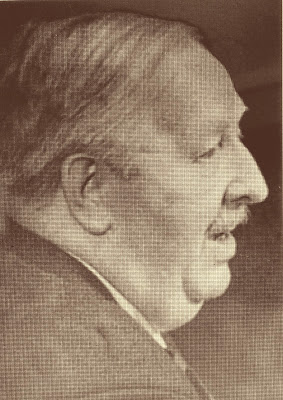
Ford Madox Ford (1873 - 1939)

Ford Madox Ford (born Ford Hermann Hueffer ( / ˈ h É› f É™r / HEF -É™r ); [1] 17 December 1873 – 26 June 1939) was an English novelist, poet, critic and editor whose journals, The English Review and The Transatlantic Review , were instrumental in the development of early 20th-century English literature. Ford is now remembered for his novels The Good Soldier (1915), the Parade's End tetralogy (1924–28) and The Fifth Queen trilogy (1906–08). The Good Soldier is frequently included among the great literature of the 20th century, including the Modern Library 100 Best Novels, [2] The Observer ′s "100 Greatest Novels of All Time", [3] and The Guardian ′s "1000 novels everyone must read." [Wikipedia: https://en.wikipedia.org/wiki/Ford_Madox_Ford ]