Posts

Showing posts with the label To Damascus

From Strindberg's "To Damascus"

STRANGER. So you're here? TEMPTER. I'm always everywhere, where it smells of quarrels. And in love affairs there are always quarrels. STRANGER. Always? TEMPTER. Always! I was invited to a silver wedding yesterday. Twenty-five years are no trifle -- and for twenty-five years they'd been quarrelling. The whole love affair had been one long shindy, with many little ones in between! And yet they loved one another, and were grateful for all the good that had come to them; the evil was forgotten, wiped out -- for a moment's happiness is worth ten days of blows and pinpricks. Oh yes! Those who won't accept evil never get anything good. The rind's very bitter, though the kernel's sweet. STRANGER. But very small.
From Strindberg's "To Damascus"

This excerpt is from the third part of the trilogy: CONFESSOR. I think you're entangling yourself in contradictions. STRANGER. I think so, too! For the whole of life consists of nothing but contradictions. The rich are the poor in spirit; the many little men hold the power, and the great only serve the little men. I've never met such proud people as the humble; I've never met an uneducated man who didn't believe himself in a position to criticize learning and to do the unpleasantest of deadly sins amongst the Saints: I mean self-complacency. In my youth I was a saint myself; but I've never been so worthless as I was then. The better I thought myself, the worse I became. CONFESSOR. Then what do you seek here? STRANGER. What I've told you already; but I'll add this: I'm seeking death without the need to die!

Expressionism, Theater, Stations of the Cross, Station Dramas

Expressionist plays often dramatise the spiritual awakening and sufferings of their protagonists and are referred to as Stationendramen (station dramas), modeled on the episodic presentation of the suffering and death of Jesus in the Stations of the Cross . August Strindberg had pioneered this form with his autobiographical trilogy To Damascus (1898-1904). The plays often dramatise the struggle against bourgeois values and established authority, often personified in the figure of the Father. In Reinhard Sorge 's The Beggar ( Der Bettler ), the young hero's mentally ill father raves about the prospect of mining the riches of Mars and is eventually poisoned by his son. In Arnolt Bronnen 's Parricide ( Vatermord ), the son stabs his tyrannical father to death, only to have to fend off the frenzied sexual overtures of his mother. In Expressionist drama, the speech is heightened, whether expansive and rhapsodic, or clipped and telegraphic. Director Leopold Jessner becam...

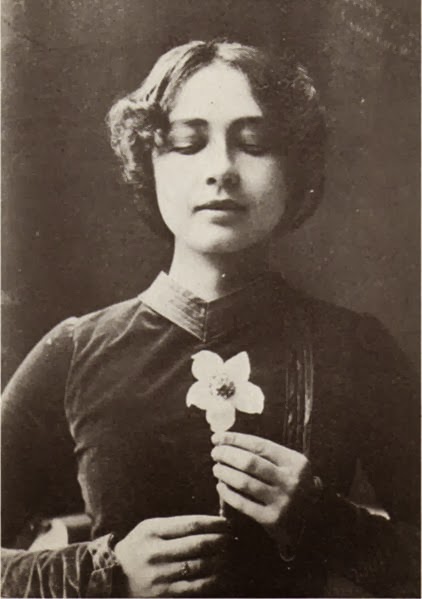
Harriet Bosse in Strindberg's "To Damascus"

Image
  [Photo fro Wikimedia Commons] 

To Damascus

To Damascus ( Swedish : Till Damaskus ), also known as The Road to Damascus , is a trilogy of plays by the Swedish playwright August Strindberg . [1] The first two parts were published in 1898, with the third following in 1904. [2] It has been described as "Strindberg's most complex play" and as "his greatest play," due to its "synthesis of a wide variety of myths, symbols and ideas with a profound spiritual analysis in a new dramatic form." [3] Writing Process Strindberg began writing Part 1 in January 1898 in France and by 8 March he had completed the manuscript. [4] This marked the first time that Strindberg had written drama in five years. [4] "If you find it good," he wrote to Gustaf af Geijerstam , "chuck it in at the theatre. If you find it impossible, hide it away." [4] At this time, he considered the first part to be complete in itself; he did not originally intend to follow it with two sequels. [4] He began w...