Unfortunately I couldn't find a photo of the last copy, the "red copy." * The Neue Rheinische Zeitung - Organ der Demokratie ("New Rhenish Newspaper - Organ of Democracy") was a German daily newspaper , published by Karl Marx in Cologne between June 1, 1848 and May 19, 1849. Its name refers to a paper earlier edited by Marx, the Rheinische Zeitung . Joseph Weydemeyer , also a member of the Communist League , was one of its editors. The NRZ was a target of government suppression , which eventually led to its ceasing publication. On 2 March 1849, Prussian soldiers came to Marx's home to arrest one of the writers. Marx refused to turn over the writer, and the soldiers eventually left. On 9 May 1849, Marx was ordered to leave the country within 24 hours, as his documents for legal residency had expired. [1] Due to the threat of arrest or exile of its writers, and in the face of continued government suppression, the NRZ published its last issue on 18 ...
We were in the Ibis just off the Royal Mile. I had walked halfway around the castle on the first night and I knew basically where St. Cuthbert's was. I woke early, checked the "big board" (a magical electronic map in the hotel) in terms of details, and was off. Of course, once there, it took me a little while to find De Quincey (I even Googled to get a look at his stone and adjacent stones -- this helped immensely). Luckily it was a pretty small graveyard. Pics: "on the way to" and "within" the churchyard/graveyard of St. Cuthbert's, Edinburgh. *
Several people involved in the film production — including Tarkovsky — had met deaths, which some crew members attribute to the film's long, arduous shooting schedule in toxic locations. Sound designer Vladimir Sharun recalls: We were shooting near Tallinn in the area around the small river Jägala with a half-functioning hydroelectric station. Up the river was a chemical plant and it poured out poisonous liquids downstream. There is even this shot in Stalker: snow falling in the summer and white foam floating down the river. In fact it was some horrible poison. Many women in our crew got allergic reactions on their faces. Tarkovsky died from cancer of the right bronchial tube. And Tolya Solonitsyn too. That it was all connected to the location shooting for Stalker became clear to me when Larisa Tarkovskaya died from the same illness in Paris. [ 6 ] [From Wikipedia: http://en.wikipedia.org/wiki/Stalker_(film )]
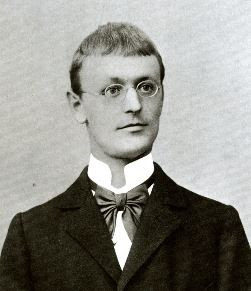
Rilke is one example; Hesse another. For Hesse psychoanalysis--of the Jungian ilk--was an inestimable boon. From Joseph Mileck's Hermann Hesse: Life and Art : Toward the end of April, Hesse left for Sonnmatt, a private clinic near Lucerne. Here he was referred to J. B. Lang, an analyst who had been one of C. G. Jung's students. He was able to return to Bern at the end of May after some electrotherapy and but twelve three-hour analytical sessions. Sixty more visits to Lucerne took place from June 1916 to November 1917. Some of Hesse's anxieties were dispelled, he learned to cope more ably with his frustrations, and he slowly emerged from his deep depression. Hesse's personal encounter with psychoanalysis had a profound effect upon his life and art. It provided him with the incentive necessary to appraise himself and his adjustment to life, and afforded him the insights needed to begin his long inward path ( Weg nach Innen ), that tortuous road t...



Comments